

Webinar Recordings
( or see most recent)

A Natural Combination: Hunting, Conservation & the Choices We Make
Artist, writer, hunter and naturalist Christopher Reiger makes the case that, while not all hunters are environmentalists and not all environmentalists are hunters, there is a natural overlap that needs to be better understood and appreciated by both hunters and anti-hunters. To see more of Christopher’s artwork: https://www.christopherreiger.art. His work has appeared many times in Bay Nature magazine.
Art: The In-Between: Ash-colored Silver Dog Tail, 2023

All About Lichen
Mount Diablo is a bio-diversity hotspot for all kinds of animal and plant life, but what about lichens? Cat Chang will share her interest in the tiny world of these fascinating partnerships of fungi and photobionts. We’ll take a look at what is found in the State Park and the surrounding areas. Bring your lichen questions!

American Kestrel
Learn about North America’s smallest falcon, the American Kestrel. This colorful and intelligent raptor can be seen hunting in the open spaces around Mount Diablo. Researchers struggle to explain the steady decline of kestrel populations over the years, thus rallying the help of citizen scientists to raise nest boxes and contribute breeding data for national studies. Brian Richardson will share a deep dive review of this treasured bird of prey, along with nesting activity of local nest boxes.

Backcountry First Aid: What to do When You Must Act Now
In 2013, Terrie Arnold, a backcountry hiker extraordinaire, was swept downslope by a rockfall in the Eastern Sierra. Being a registered nurse with 25 years as a specialist in spinal cord injuries, she diagnosed her injury instantly: a lower leg fracture. With the aid of her three hiking companions, she extricated herself from the unstable, steep terrain and now makes it her mission to teach hikers at all levels about backcountry first aid. In this presentation, she inspires us all to learn how to respond when an emergency situation occurs in the backcountry.

Birds of Mount Diablo
Birding and bird photography enthusiast Jerry Britten will present a slideshow of Birds of Mount Diablo. Far from an exhaustive overview, he will focus instead on a subset of birds including hummingbirds, spring warblers, some uncommon birds and some ID challenges. His presentation will feature sound recordings as well as photographs. Jerry is the President of Mount Diablo Audubon Society, and a volunteer property monitoring steward and hike leader for Save Mount Diablo. He has seen over 1500 species of birds, and photographed over 1100, on travels in the Americas, Africa, Europe and Asia.

Butterflies of Mount Diablo
Join MDIA naturalist Michael Marchiano to view a cross-section of butterflies found on Mount Diablo winter through fall. View the photographs of outstanding nature photographer and naturalist Dan Fitzgerald and be surprised by the number of species that can be seen on the mountain, for those that take the time to stop and look. Learn interesting facts about butterflies from the "giant" Tiger Swallowtail to the "tiny" Pygmy Blue. Find out about our MDIA Butterfly Guide and (in the future when COVID restrictions permit) join MDIA leaders on a butterfly hike.

California Condors: History, Biology, and the Path to Recovery
Join wildlife biologist Joseph Belli as he provides an inside look at the effort to restore California condors to the region. Learn about condor history, biology, and the challenges of returning these incredible raptors to the landscape.
Joseph has been part of the Condor Crew at Pinnacles and is the author of “Beneath a Black and White Sky: A Year Among Condors in Pinnacles National Park.”

California Naturalist Graduate Projects
This is a symposium showcasing Cal Nat graduates as they share their capstone projects. Dan Sandri, Harry York, Linda Kwong, and Tere Dixon completed some amazing projects for their class. Their projects cover a wide range of naturalist topics including the new wildflower guide, biking highlights up the mountain, a native bee guide, and a template for outdoor science education. Watch and enjoy the creativity and passion each person brought to their project. For more information about the California Naturalist Course for the Mount Diablo Region go to: https://calnat.ucanr.edu/Take_a_class/Las_Positas_College/

California Wolves
Wolves are returning to California after nearly a century of absence, bringing both ecological interest and real challenges for the rural communities who share the landscape with them. In this webinar, Dr. Kaggie Orrick of the University of California, Berkeley’s California Wolf Project will discuss the current status of wolves in the state, what researchers are learning about their movements and diet, and how their recovery intersects with livestock production. The talk will highlight how wolves have returned to the state, their current and future presence, the complexity of wolves on working lands, and the efforts underway to better understand and reduce conflict. Participants will gain insight into the complex balance between carnivore recovery and working landscapes, and the research and management approaches being developed to support both wildlife and the people who live alongside it.

California’s Iconic Oaks and Their Many Relations
Oaks support more life forms than any other tree in North America, and California’s oaks are no exception. In a presentation filled with woodpeckers, woodrats, wood ducks, and many other organisms, author and naturalist Kate Marianchild will explain why oaks play such an important role in oak woodland food webs. She will talk about animals that rely on oaks for food, shelter, foraging substrate, and more, and oak mistletoe as a keystone genus. We’ll hear about the eleven functions of a gray squirrel’s tail, and we’ll marvel at the tiny wasps who bend oaks to their bidding. We will crawl with Kate through woodrat mansions, fight for breeding opportunities with acorn woodpeckers, and navigate through an oak with the third eye of the western fence lizard. Who could stay away?

Cattle's Role in Conservation
Cattle's Role in Conservation:
You will hear from Cari Koopman, Tim's daughter, about the role grazing plays in conservation. She will share the commitment ranchers have to being stewards of the land. This two part series will give you a good understanding of current ranching practices and help you to interpret the role cattle play within Mount Diablo State Park, on both private land and State Park land.

Citizen Coyotes of San Francisco
In this comprehensive introduction to coyotes, Janet Kessler discusses the behavior & personality of coyotes. She will be unveiling, from first-hand experience and observation, just how savvy, social, sentient and singular coyotes really are! Though Ms. Kessler is, by definition, a hobbyist, she has amassed a significant body of information in the last 17 years she has studied these coyotes. She has exhibited photographs several times in San Francisco’s Randall Museum gallery.

Common Spiders of Mount Diablo
Step inside the world of spiders with Dr. Jack Fraser through his pictures and stories in this webinar from Mount Diablo Interpretive Association. You'll be amazed by the widely varied locations, eating habits, and defense mechanisms of these fascinating creatures, giving you a new appreciation for spiders and how to find them—not always where you expected!

Coyote Behavior in the Urban Interface
With local human/coyote interactions fresh in the news of late, this is a timely discussion. We will address urban coyote behavior and management and the delicate interface between humans and the most persecuted keystone species in North America. How education and understanding is the only way forward.

Dinosaurs of Diablo (sort of)
Ancient mastodons, horses, camels, saber tooth tigers, bone crushing dogs on Mount Diablo….who knew? Lisa White, the Director of Education and Outreach at the UC Museum of Paleontology will share the amazing discoveries that have been uncovered in the Blackhawk Ranch Quarry on Mount Diablo. You will learn about the paleontological digs on this site and the amazing array of plants and animals that have been found on this unique locality since research began in the 1950’s.

Discover Mary Bowerman Trail
Join MDIA board member and California Naturalist graduate Dan Fitzgerald as he takes you on a virtual tour around the Mary Bowerman Trail at the summit of Mount Diablo. There are over 125 wildflowers that bloom on the Mary Bowerman Trail! Dan will show you some of the ones he has photographed along the trail and the butterflies he has found using them.

Extant Pre-historic Plants of Mount Diablo
Have you ever wondered what the first plants to colonize land looked like? Have you ever wondered about what kind of plants were present when dinosaurs roamed the earth? Did you know you can find such plants, from the dawn of plant-life on land onwards into the dinosaur era, still existing within the boundaries of Mount Diablo SP? Join botanist Chris Chastain for a presentation on a fascinating and often overlooked flora of the State Park that represents successive stages of plant evolution: The Bryophytes (mosses, hornworts, and liverworts), the Seedless Vascular Plants (ferns and horsetails) and the Gymnosperms (coniferous trees).

Fire on Mount Diablo
Join us for a fascinating discussion about controlled burns on Mount Diablo. You will hear about the history of controlled burns, the objective, how they manage them, what are the plans for the future, and how sites are selected. This is a timely topic as there is much discussion locally and nationally about this strategy for resource management. Presented by Mason Hyland, Senior Environmental Scientist and Christina Lew, Environmental Scientist at Mount Diablo State Park.

Forest Bathing
Ever notice how a walk in the woods seems to magically clear your mind or spark new ideas? Come learn all about what’s behind that feel-good forest effect!
Join certified forest bathing guide Anya Starovoytov as she introduces us to the calming, science-backed wellness practice of forest bathing—a mindful, sensory-based experience inspired by the Japanese practice of Shinrin Yoku. It’s not about exercise or getting your steps in—it’s about slowing down, tuning in, and letting nature work its magic on your mind and body. You’ll learn how forest bathing can reduce stress, ease anxiety, boost your immune system, and even improve heart health. Plus, Anya will share her journey to becoming a guide and lead a short, remote mini-session so you can get a taste of the practice—no forest (or swimsuit) required.
Step into the calm. Slow down. And discover how nature can help you hit the reset button.

Forgotten Landscapes of California
Laura Cunningham, an accomplished artist and author, presents this webinar. Cunningham’s life's work is at once a celebration of California’s past – its natural legacy of abundance and diversity – and of change. In A State of Change: Forgotten Landscapes of California Cunningham imagines what a prehistoric California must have looked like using research from history, prehistory, field work, and scientific illustration.

Geology of Mount Diablo
John Karachewski, a geologist, hiker, bike rider and photographer will take you on a ride up Northgate and Summit Roads to see over 200 million years of geological history. Your front-seat journey takes you from ancient lava flows erupted on the seafloor thousands of miles away to modern landslides as you learn how Mount Diablo became the prominent natural landmark of Northern California.

Geology of Mount Diablo: 2 New Publications
Highlights from Two New Publications on the Geology of Mount Diablo is presented by Greg Bartow. Greg discusses some brand new resources to help you understand the geology of the mountain. The first is an expansive book titled Regional Geology of Mount Diablo, California: Its Tectonic Evolution on the North America Plate Boundary. A second publication is Geologic Guide to Mount Diablo, a simplified guide in the form of a geologic trail map on one side and interpretive information suitable for the layperson on the back.
Greg is Water Infrastructure Advisor, California State Parks and the editor of our new full color geologic map.

Gray Foxes and Extinctions, Local & Global
In studying gray foxes for more almost two decades on the Bay near Palo Alto, Bill Leikam, known as "the fox guy," has good reason for his gentle but implacable statements about relentless urban development and the fast-paced loss of species across the globe. Foxes need wild lands, and so do humans. We know that, but not all humans see it that way. When Bill talks about fragmentation of habitat, we need only to think of all the hacked trails on and around the mountain to see exactly what he means. Where can the wildlife go to get away from us?

Hidden Gems of Mount Diablo
Ever wondered why the top of Mount Diablo is inside a building? Have you seen the goldfish on one of our steepest trails? Ever visited the rock dam in Perkins Canyon? Steve Smith, President of the Mount Diablo Interpretive Association, will present The Hidden Gems of Mount Diablo, directing you to the stories and locations of some of the treasures on the mountain that might be a little less known but no less fascinating.

Hiking Apps Introduction
Hiking applications for cell phones promise to navigate while hiking, suggest trails to get to a specific location, post reviews by prior hikers, and/or record a hiker’s actual route. These programs, when properly used, can be helpful navigation aids, but they also have limitations. The webinar includes live displays of the features of each of these applications and present hints when using hiking apps in the Mount Diablo State Park.
How to Identify Wildflowers
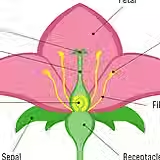
What is that flower? So many of us are asked that question by visitors or for our own knowledge. Join us in this webinar to learn basic features of leaves and flowers to more easily identify wildflowers, with an emphasis on the plants of Mount Diablo. With some knowledge of visible plant structures, field guides and dichotomous keys can become friend, not frustration! Michele Stanton is a relative newcomer to the Bay Area, but she holds a BS and MS in Horticulture, and taught Horticulture in the Midwest at both the university level and for adult education. She is often a docent at Mitchell Canyon Visitor Center.

Insects of Mount Diablo: Spring and Summer
This webinar covers some of the amazing lifecycles of the insects you can look out for on and around Mount Diablo. As we enter the beautiful season of Spring we look forward to seeing a burst of wildflowers and plant life, as well as witnessing the return of migrating birds and re-emerging reptiles. Much of the Spring activity we see on the mountain is based on the boom in numbers of insects. What are the colorful, fascinating insects we might encounter as we walk the trails of Mount Diablo in Spring and early Summer, and how do they interact with each other?

Keep 'Em Flying: Helping Raptors Survive in the Human Environment
The presentation discusses what raptors are, how they get in trouble, and how we help them. This overview of 10 years of rescue work focuses on familiar local raptor residents, and also describes encounters with less common species and situations. We hope you’ll enjoy this insider’s look at an unusual niche of wildlife conservation.
Craig Nikitas, a retired urban planner, has been a wildlife volunteer working with raptors for over fifty years. In 2015 Craig founded Bay Raptor Rescue to provide a free service to aid predatory birds in distress. The work is done under permit from the US Fish and Wildlife Service, and the Cal Department of Fish and Wildlife. His work comprises trapping free-flighted birds (most often in buildings), netting birds grounded by illness or injury, and transporting those which need veterinary care to local rehabilitation facilities.

Lizards of the Diablo Range
Did you know there are over a dozen species of lizards inhabiting the Diablo Range? Join Joseph Belli as we take a closer look at these diverse reptiles! Joseph has studied lizards in the Diablo Range for years and has amassed a deep understanding of the lizards through observation and scientific research. You will be amazed at the diversity of this species which goes far beyond the usual lizards we see on the trail! Joseph Belli has hiked and explored the Diablo Range extensively since the 1970s. He holds a Master of Science in Conservation Biology and has worked as a wildlife biologist for the National Park Service.

Migration Cut Short: Local Trout and Salmon with Nowhere to Go
For millennia, the first rains of autumn have signaled the start of the annual run of Chinook salmon, also known as king salmon, in the Walnut Creek watershed. Steelhead and resident rainbow trout begin later, in the fall, winter, and on into spring. But since the 1950's, flood control concerns of fast-developing cities have spelled doomsday for these native fishes. In Mitchell Creek, for instance, the last sightings were in the late 1980's. The good news: restoration of Pine Creek, for instance, on MDSP's western edge, would be "relatively easy" according to our speaker, James Hale, known as Doc, a vertebrate zoologist who has spent 50 years studying the wildlife of the East Bay. Can we recover other creeks, and what would it take?

Mitchell Canyon Birding Hotspot – Spring Migration
Spring in the East Bay outdoors means enjoying comfortable weather, looking at beautiful wildflowers, and greeting the colorful migratory birds flying up from further south that either settle here to find mates and nest, or stop briefly before continuing up north. Mitchell Canyon, on the north slope of Mount Diablo and lying within Mount Diablo State Park, is known by birders as perhaps the best place around to see this annual rush of feathered color and song.
In this presentation you will see some beautiful birds, fascinating migratory maps and learn what we all must do to help Mitchell Canyon’s beautiful birds survive. Presented by Juan Pablo Galván Martínez (Mount Diablo State Park volunteer, Mount Diablo Audubon Society Conservation Chair, and Senior Land Use Manager for Save Mount Diablo).

Mount Diablo Survey Markers
The history of property mapping in California after it became a state in 1850 begins at the summit of Mount Diablo. The mountain’s prominence on the landscape made the summit the perfect location for early land surveyors to mark the starting point for a grid of lines that would be used to define property boundaries throughout most of northern California and all of Nevada. Surveying expert John Pettley will discuss the history and significance of the survey marks on top of Mount Diablo which are still in use by land surveyors today.

Mushrooms on the Mountain
Let’s start the new year off by joining Michael Marchiano to discover the wide variety of mushrooms that call Contra Costa home. You will see some of the wonderful photos that Michael and Dan Fitzgerald have gathered of various mushrooms and learn about their habitat and life cycle. Are mushrooms plants or animals or something else? Discover these answers and more at this fun webinar.
Michael Marchiano is a widely respected naturalist, presenter, hike leader, teacher and a passionate advocate of Mount Diablo.

Native Bee Guide to Mount Diablo
Join us for this webinar to celebrate the release of a new pocket guide, Native Bees of Mount Diablo. Author Dan Sandri, who is an avid naturalist and entomologist, has created this new carry-with-you book. Dan will share with you the development of the guide as he presents an interesting and lively webinar about the many species that make Mount Diablo their home.

Native Bees of Mount Diablo
It is Springtime and native bees can be seen all over Mount Diablo: on the wildflowers, blooming shrubs and trees, and patrolling the trails of the mountain. Join entomology enthusiast and MDIA Board member Dan Sandri for a presentation about the native bees of Mount Diablo, and learn what these bees are doing. See tips on how to identify some of the most-common native bees found on the mountain, and hear about their life cycles and habits. How long do they live? What are the threats they face from predators, parasites and the changing environment, and what can you do to help them?

Native Trees of Mount Diablo
Wildflowers are the divas of springtime, but the allure of our native trees extends through every season. Join us for a virtual stroll up Mitchell Canyon and indulge your inner druid as we share fascinating tidbits about Diablo’s dendritic darlings. How is climate change and habitat loss impacting our native trees? What tree was the original source of aspirin? Which is the “gasoline tree”? And which tree offers a goodly but inedible crop of “California pears”? We'll also share tales of early day botanical explorers who risked life and limb to learn the secrets of the trees.

Native to Right Here: the plants, animals, and people of Tuushtak
In this 25-minute film premiere, Cafe Ohlone founders Vincent Medina and Louis Trevino lead a walk in the hills below their most sacred peak, Tuushtak, aka Mount Diablo. As they point out plants and animals along the way, they discuss Ohlone history, culture, and cuisine—and how we can all celebrate what is "native to right here." Vincent and Louis have graciously agreed to answer your questions following the premier.
Sponsored by Mount Diablo Interpretive Association. Videography by Wally De Young. Music by Phil Heywood. Photos by Scott Hein, Arnold Joe, Cindy Roessler, Wally De Young. Production by Joan Hamilton.

Naturalist's Field Trip: Panama Part 2
In Part 2 of their Panama journey, naturalists and photographers Dan Fitzgerald and Dan Sandri traveled into the rugged Darièn region of eastern Panama and then to the highlands west of Panama City and took to the rivers and mountains to see incredible birds such as the Harpy and Crested Eagle, Spectacled owl, Rufous-crested Coquette and Black-crowned Antpitta. They will show you the people and countryside of Panama and documented wildlife, including mammals, insects and reptiles on the trip. Join us for this colorful presentation!

Naturalists Field Trip: Panama
Recently, naturalists and photographers Dan Fitzgerald and Dan Sandri explored the humid, muddy rainforests of central and eastern Panama on their quest to see the birds, animals, and flora of this beautiful Central America country. Join us for a webinar as The Two Dans show you the countryside, plants, and wildlife of Panama through their remarkable photography. On this adventure, they saw 375 birds, including toucans, hummingbirds and the Harpy Eagle!

Newt and other Amphibians of Contra Costa County
With Winter rains come the filling of ponds and streams and the emergence of our local frogs, salamanders, and toads returning to their seasonal mating grounds. Find out which Amphibians live in our county and their role in the environment. Learn about the endangered species that live on Mount Diablo and how they survive our long hot summers. Maybe one or two live specimens will appear on your screen.

Night Sky Above Mount Diablo on the Winter Solstice
Please join MDIA in looking upward to the skies. We will have an amazing presentation by Steve Jacobs, president of the Mount Diablo Astronomical Society (MDAS) and colleagues talking about the programs they conduct at the summit, and about how the winter solstice (December 21) will have an effect on humans, animals, and plants as we change the seasons. Join us for this fascinating program to learn about the sky above Mount Diablo and see some of the beautiful images of the night sky their members have produced.

On Track for Excellence: Animal Tracking
Meghan Walla-Murphy is an expert tracker who lives in Northern California. In this presentation, her focus "is a blend of writing and environmental conservation with an emphasis on wildlife corridors and linkages," a core interest for all of us around Mount Diablo. We'll learn how to be fully present on the trail, open to all detail by walking slowly to note even the faintest tracks. She'll show us how to judge the number of individuals (pigs or deer, for instance), the weight, and, potentially, the gender. That'll take some practice, and February -- if we get more rain -- is a good time to put new tracking skills to the test. See her website here: http://www.meghanwallamurphy.com.

Opossums: Misunderstood
Opossums are a small non-native mammal. It is North America's only marsupial and has an interesting physiology, such as a pouch to hold developing young, and a gestation period of 13 days. Opossums can be seen in both urban and rural environments, and have adapted new behaviors to live in an urban environment. Didelphis virginiana is considered a 'generalist' and has a loose set of cultural requirements that adapt to different habitats. These animals are generally misunderstood and viewed as aggressive. One reason for this view is because they hiss when threatened. Aggression is not an accurate depiction of it's behavior. Opossums are a part of our world, as we are a part of theirs. There is much to learn!

Peregrine Falcons of Pine Canyon
Join Peregrine Team leader Staci Hobbet and Wally De Young for an up close and personal look at the Peregrine Falcons of Pine Canyon. You'll learn about this incredible apex predator and the remarkable success story of their reintroduction after local extinction; the mission of the volunteers known as the Peregrine Team; as well as a look at the struggles the Peregrine encountered this very season.
Protecting Nesting Bird Habitat on the Pacific Flyway
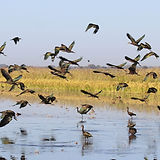
Have you ever driven along highway 5 or 99 and noticed the flooded rice fields in the winter providing habitat on the Pacific Flyway? Join us in learning about how this program was developed and administered. Our presenter for this evening is Luke Matthews who coordinates this program at California Department of Fish and Wildlife.
The Nesting Bird Habitat Incentive Program was established in 2018 to address declines in breeding waterfowl and pheasant populations in California. This program is administered by CDFW and is entirely funded through fees that are collected from the sale of California Duck and Upland Game Bird Validations.
Luke will highlight how they are accomplishing their goals by monitoring breeding waterfowl and working with a wide range of stakeholders to improve key habitat conditions on public and private lands across the entire state.

Ranching History
Ranching History:
This ranch has been run by the Koopman family since 1918 and has continually evolved practices to become a model of conservation ranching. You will hear stories of this ranching history from where it started, to what it has become today.

Rare Plants on Mount Diablo
Join our experienced naturalist Dan Fitzgerald, as he takes you on a virtual hike from Mount Diablo's lower elevation to its summit and see what are some of the rarer and less observed blooming plants on the mountain. You will be treated to some stunning photos and a lot of insight about these plants as Dan travels the mountain in search of these rarer plants.

Rat Poison Kills More Than Rats
Is rat poison our “new DDT”? Raptors are the Solution (RATS) will discuss the impacts on wildlife being caused by anticoagulant rodenticides in the food web. RATS will explain the effects of these poisons on birds of prey as well as on bobcats, mountain lions, foxes, and Pacific fishers, among many other animals, including domestic pets. We will discuss AB 1788, which went into effect on Jan. 1, 2021, and RATS’ legal efforts to better regulate these poisons, as well as alternatives to rodenticides, and what individuals and municipalities can do to help beneficial predators thrive and continue to provide us with their free, natural, pest control services.

Rattlesnake vs Ground Squirrel: The Predator Doesn’t Always Win
Do you root for the underdog ground squirrel or the hungry snake? Armed with potent venom, a rattlesnake is not guaranteed to come away with the prey. Join Park Interpreter Sharon Peterson to explore surprising details of the relationship between rattlesnakes and ground squirrels.

Reptilian Mount Diablo
What reptiles inhabit our open spaces? Snakes, Lizards and even a Turtle are found on Mount Diablo. Learn to recognize these fascinating creatures on the sky-island in the middle of Contra Costa County. Join us and find out about the unusual and rare reptiles that inhabit this natural wonderland. What are the true facts about the only venomous snake found in Northern California, the Northern Pacific Rattlesnake? Find out about, "Blue Bellies, Horned Toads, and Whiptails." Join Contra Costa Native, naturalist Michael Marchiano, who has studied and photographed these amazing animals since childhood as he shares his enthusiasm for these often maligned creatures.

River Otters
River Otter Ecology Project is a research, education, and conservation organization founded in 2012 to support healthy watersheds for otters and all the rest of us. Please join us for Supporting Conservation, Otter by Otter, a deep dive into our Otter Spotter program, what it accomplished, to whom it matters, and where we’re headed. It is a fun, educational and interactive presentation filled with photos and video of those entertaining and important predators living and thriving in the San Francisco Bay Area. We’ll also talk about the importance of the very cool Contra Costa County otters, and how they’re supporting education and conservation.

Rooted In Relationship: Art and Illustration
Artist, writer, and illustrator Christopher Reiger presents a survey of his artwork and illustration. Christopher is fascinated with natural history, conservation, and ecology, and his visual art and writing projects wrestle particularly with the human relationship to nonhuman animal species. Christopher lives in Santa Rosa with his wife and two young sons.

STILL COOKING AT 90: The Rehab of the Mount Diablo Stoves
Mount Diablo's rustic stone grills are viewed as part of the landscape, but they are celebrities, the enduring product of a unique effort to improve the nation's parks during the Great Depression by President Franklin Roosevelt's Civilian Conservation Corps, 1933-1942. On Mount Diablo, guided by expert stonemasons, the CCC used native stone to construct these monumental stoves, echoing the rocky beauty of the mountain. A talented and dedicated group of park volunteers are now rebuilding them with the tender loving care they deserve. The team members will tell us about their work as detectives and masons, and the characteristics of these historic monuments that are still cooking in their eighties and ninties.

Seeing Inside of a Mountain
Have you ever traveled up Mitchell Canyon Road and looked at the quarry? As docents, we often try to answer these questions from visitors: What is happening up there? Where is that rock going? What kind of rock is this and what does it tell us about the origin of Mount Diablo? How long will that quarry be in existence and what happens when they are done? All of these questions and more will be answered by representatives from CEMEX, the operator of the quarry and a supporter of MDIA.

Sky Island Adventures
What do you get when you mix 3 experienced local Naturalists with Southeast Arizona and Southwest New Mexico in the height of monsoon season? Seriously Soggy Science Guys? Actually, yes… and much more: over 50 species of butterflies, 70+ species of birds, 100+ plants, 6 different toads, rattlesnakes, tarantulas, strange insects, a bear and much more. Join Dan Fitzgerald and Dan Sandri as they share their favorite photos from their adventures on the flooded roads with Michael Marchiano in 4 different mountain ranges and the lowlands that surround them.

Spiders in Your Neighborhood
Spiders! Scary? Maybe. Cool? Definitely. Author Pat Stadille used to be terribly afraid of these eight-legged daddies, until he started learning more about them. Now spiders are his best friends. Once you hear about their silky skills, hunting habits, and generally shy and gentle nature, you might feel the same way. Learn about jumpers, wolf spiders, tarantulas, the “bird turd spider,” and, of course, the black widow. This much-expanded edition is bursting with new species and new spider science. Spiders in Your Neighborhood features detailed drawings and photos of the critters you’ll find, and sections on types of webs, how and where to discover spiders, spider anatomy, and common relatives. This edition also features guided science experiments for budding naturalists; and nature journalists will love Pat’s observation tips and drawing lessons. Grab a flashlight, your sleuthing kit, and join Pat “Spiderman” Stadille on a journey around your backyard that will leave you spinning with excitement.

Tarantula Hawk Wasp
Lia Keener, Bay Nature’s events coordinator and contributor, will share a presentation about tarantula hawk wasps, their unique ecology, and their parasitism of tarantulas. This talk will provide an overview of the life cycle of these wasps, which are known to duel with tarantulas in the Bay Area and beyond. You’ve likely heard their characteristic weed-whacker-like buzz, on warm days during Bay Area summers, so tune in to learn more about these colorful and charismatic wasps.

Tarantula Time on the Mountain
Michael Marchiano shares his deep knowledge of the tarantulas, why we mostly see them during these few months, which ones we see and what life is like for these gentle giants of the spider world. Don't miss this opportunity to learn more about these fascinating spiders.

The Art of Life Unseen
Small mammal bones, arranged like lace, bring a new perspective to ecosystems. Join artist and community scientist Emily Blumer as she shares her creative process. From collecting local bird pellets, to identifying what raptors are eating, and making bone art.

The Fascinating World of Bats on Mount Diablo
Join Corky Quirk from NorCal Bats to learn more about the amazing flying mammals of your neighborhood. Topics include flight, echolocation, their importance to agriculture and other fascinating information. As a highlight of the program, you will view three species of bats native to the Mount Diablo area. Presented by Corky Quirk, founder of NorCal Bats, who has been working extensively with bats for almost 20 years.

The Joy of Foraging
Join Colleen Crane, local forager, on a treasure hunt for hidden edible gems in plain sight, culinary creations and discoveries about history, nature and sustainability as she talks about her experiences foraging edible plants in the East Bay. She will share how to get started foraging, resources for identifying what is edible, tips on where to legally forage and how to process foraged plants into delicious delights.
The Mystery of Masting in California Oaks
Masting—highly variable, synchronized seed production within a population of plants—is well known among oaks. How and why oaks mast, however, is poorly understood, despite the strong ecosystem effects that acorn crops have on populations of animals, both here in California and elsewhere. In this talk Walt Koenig, Visiting Senior Scientist at Cornell University, will discuss our attempts, by means of the statewide California Acorn Survey, to quantify patterns of acorn production by California oaks with the goals of understanding how trees synchronize their reproductive efforts and the interactions between acorn production and other life-history traits, both of the trees and the animals that depend on them.

Tick Talk
One Bite Can Change Your Life
Lyme disease is prevalent in Northern California, yet most practicing physicians don’t recognize the signs and symptoms of the disease. You have to be your own best warrior. Learn how to prevent tick bites, recognize the ticks that are prevalent in Contra Costa County and the disease they carry, and what to do if you are bitten. Carolyn Degnan, COO of LymeDisease.org will talk about the steps you need to know to protect yourself, your family and your pets from this debilitating disease. Carolyn is a longtime resident of CCC and has two daughters who were bitten in the San Ramon Valley. Both daughters contracted Lyme disease and multiple co-infections while hiking and trail riding. She has been a Lyme advocate since 2002 giving Lyme prevention talks to The US Forest Service, EBMUD, PG&E, Boy and Girls Scout troops, Fire Fighters, local service clubs, etc. Any question you would like to have answered during the hour can be directed to Carolyn at cdegnan@lymedisease.org.

Understanding Tarantulas (The gentle giants of Mount Diablo)
Join us in this webinar presented by Chris Hamilton, Assistant Professor of Entomology, Plant Pathology and Nematology at the University of Idaho. He has studied tarantulas, including those on Mount Diablo.
He will talk about Aphonopelma in general, the current state of our knowledge, and what his lab is working on right now including the Aphonopelma iodius species complex – which includes the Mount Diablo spider.

Virtual Hike on Knobcone Point
Join the two Dans as they explore the sites, flora and fauna to see as one hikes along Knobcone Point Road in the southern part of Mount Diablo State Park, and into Save Mount Diablo's upper Curry Canyon Ranch. On Mount Diablo, Spring comes early to the chaparral along the trail. The first bees begin to emerge for their Spring in the first week of January, and different species find ready nectar for energy, and pollen for their young, in the blooms of four species of manzanita along the trail. Other plants found here include stonecrops and Knobcone Pine, and they are found in just a few other places in the park. This trail is great for birding in the early season too, with opportunities to see Varied Thrush, falcons, wrentits, nuthatches and other birds. Take a virtual hike with us and learn what wonders await you for your own exploration!

Watersheds in Mount Diablo
Mount Diablo’s and Surrounding Watersheds in Today’s World: What’s happening with the health of Contra Costa Watersheds in today’s world of political and environmental issues? Can we find any bits of encouragement amidst climate change, wildfires and political strife? Let’s take a look at the news and see if we can glean something positive from the realities of your local watershed today.

Watersheds of Mount Diablo
Mount Diablo is an integral part of three major watersheds in Contra Costa County. This presentation will explore what a watershed is, how watersheds work and their environmental challenges. We will look at watershed management considerations at Mount Diablo State Park. Presenter for this webinar is Steve Elliott, one of the long time volunteer leads at the Park.

Western Pond Turtles & Their Survival Skills
You may have noticed turtles in the streams and ponds of the Diablo Range and wondered how they persist in such a dry environment. This presentation will shed light on the ecology of Western Pond turtles in the Diablo Range by exploring how they use various habitats throughout the year to survive in a semi-arid land. Joseph Belli is a writer, hiker, environmentalist with a Masters of Science in Conservation Biology.

Why We Need to Be Wild
Jessica Carew Kraft, the author of Why We Need to Be Wild: One Woman’s Quest for Ancient Human Answers to 21st-Century Questions (Sourcebooks, 2023) will talk about her journey from working in Silicon Valley tech to embracing nature immersion and learning the ancestral skills common to all humans over our 300,000-year history on earth as Homo sapiens. Jessica will call upon her training in anthropology to show why hunting and gathering is the innate and pre-programmed lifestyle for humans, why it's naturally enjoyable, and why you might want to practice wild skills to deepen your connection to nature and understand your human heritage.

Wild Boar Ecology
Doc Hale discusses the ecology of the Wild Boar (Sus scrofa) and feral pigs in Contra Costa County. He highlights their introduction into the state, their dispersal, ecological impacts, and management. Doc has been fascinated with Wild Boar since childhood, and has researched their presence throughout history, California, and the world.

Wild Cats of Mount Diablo
Learn about the Felidae Conservation Funds' current work with mountain lions and bobcats around Mount Diablo and throughout the Bay Area, including mountain lion ecology, history, and the challenges of sharing habitat with wild felids in California. Learn essential tips for living and recreating without fear. Our presenter will also discuss the important role of wild cats in creating healthy ecosystems and enjoy engaging photos and videos.

Wild Mount Diablo
Get out the popcorn for a lively evening of short nature films. All were made by MDIA's very own video team—Wild Mount Diablo. Topics this year include pines, poison oak, animal babies, peregrine falcons, and early- and late-blooming wildflowers. On hand to answer questions will be naturalist Ken Lavin and team members Wally De Young, Joan Hamilton, Staci Hobbet, and Kendall Oei.

Wild Mount Diablo Film Fest
Join us on September 9 for a "Film Fest" of four recent Wild Mount Diablo short films. This film fest will be presented by Wally De Young, filmmaker and naturalist, as he explores the world of Peregrine Falcons; Serpents of Diablo; The Watering Hole; and Wild Babies. The content for each of these films is from Mount Diablo. You will get a chance to find out what inspired these films, how they were produced and have a chance to ask questions of the film maker. You will learn a lot and be treated to some amazing photography.

Wild Mount Diablo's Far Out Film Team
In 2021, MDIA sponsored a new project, Wild Mount Diablo, a series of very short films on the iconic native species of Mount Diablo State Park. Joan Hamilton, director and producer of MDIA’s well-known longer film series, Audible Mount Diablo, heads the three-person production team. Joan, Wally De Young and Kendall Oei film and produce the segments.
Join them along with master Nauralist Ken Lavin as they share their beautiful nature nuggets with you, along with their personal perspectives on filming each subject: ladybugs, deer, river otters, poppies, bobcats, mistletoe, kestrels, and “Wonders of Diablo 2022.” Your blood pressure will go down, and your happiness will spike, when you let this parade of beauties pass before your eyes.

Wildflowers of Mount Diablo
Mount Diablo Interpretive Association President and Mount Diablo State Park Docent Steve Smith discusses how some of our flowers earned their wild names, how flowers have been used by humans ritualistically throughout the ages, and why we chose some of these flowers to represent our state and country.